
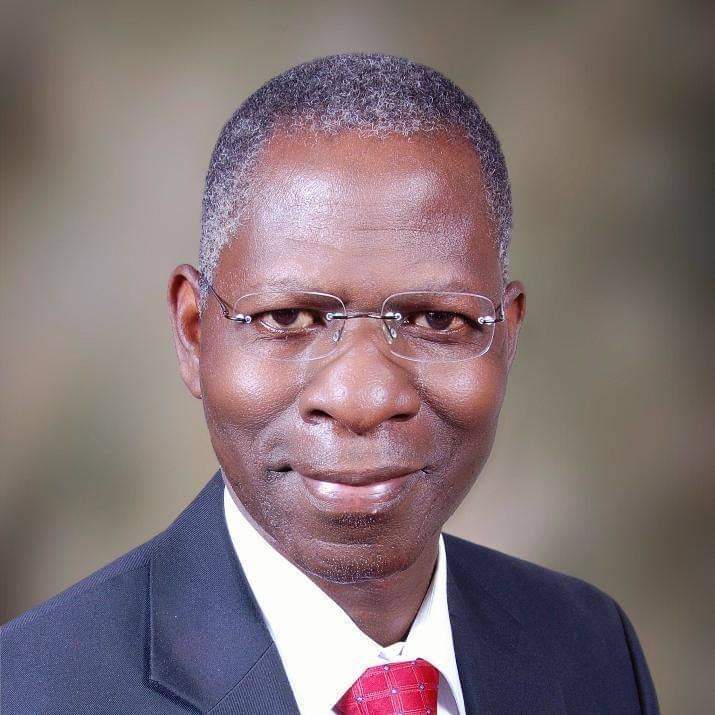
By Freelance Reporters, Jos
In a publication by opr.news on May 31, 2023 with a screaming headline: ‘Group Decries Plateau State’s Lack of Development, Questions Gomos’ Competence’, which trended on some new media platforms, if anything at all, it was laughable as it makes nonsense of their motives.
While we do not question the rights of any group to interrogate the activities of any public officer, we hasten to state that the leadership of the group is a beer parlour concoction; even as their real identities are questionable as they are filled with bile to tarnish Nde Gomos’ reputation.
If they thought they were stirring the hornet’s nest, they failed woefully without achieving their aim.
Ordinarily, we would have ignored the statement of the faceless Concerned Plateau Citizens Group because we suspect that they were sponsored by people who are unfamiliar of the functions and operations of the Economic Advisory Council of Plateau State, or they are just a bunch of ignoramus or both.
However, in order to put the records straight especially because the hard-earned reputation of Nde Ezekiel Gomos, OFR is being soiled in the public domain, we have taken time to educate them and their likes, on the basic issues regarding the economy of the Plateau State.
To do this, we took our time to ask questions, seek answers, seek for information and even interviewed some members of the Plateau State Economic Advisory Council.
a) First, it is important for the public to know that the Plateau State Economic Council was set up by Governor Simon Lalong in 2015 purely as an advisory body with about 13 members being drawn from the academia, the private sector and several commissioners including the Chairman of the Plateau State Internal Revenue Service, the DG PLASMIDA etc. As the name implies, it is purely an advisory body, and so DOES NOT HAVE ANY POWERS OR AUTHORITY TO EXECUTE OR IMPLEMENT its ideas, suggestions or recommendations. Like any advisory body, its recommendations can either be accepted, rejected or noted.
b) Apart from the public sector members like Commissioners, all its members including Nde Ezekiel Gomos are NOT paid any salary by the Government of Plateau State but are given occasional honorarium as appreciation for their sacrifice, and we understand that even this honorarium was later stopped in 2021.
c) The Council meets occasionally or as the situation demands, to deliberate on issues sent to it by the Governor of the State. In some months, its meetings can be very frequent depending on the issues at stake. At the end of its meetings, its recommendations are sent directly to the Governor who decides what to do with same.
d) We understand that Nde Gomos, OFR was appointed to the Economic Advisory Council in February 2016 as a member but was made acting Chairman in June 2016 when the substantive Chairman was given a national assignment. He remained acting Chairman of this Council until the end of the Lalong government, though along the line, he was made an Honorary Economic Adviser to the Governor in December 2021 – a purely nominal and non-salaried position. Of course, all Honorary Advisers to the Governor do not have any offices and are appointed purely in recognition of the expertise, and the range of advice they may be called upon to provide, and do not have any structure or office to implement their recommendations.
State of the Plateau State Economy 2015-2023
Since the crux of the write up of this faceless hirelings is the “lamentable” state of the Plateau state economy in the period 2015 to date, it is only fair that we take another look at the state of the economy.
Unfortunately, the writers did not tell us what criteria they used in assessing the performance of the State economy for them to arrive at their jaundiced conclusions.
Neither did they provide any indices or statistics to back up their claims.
In addition, they did not make any bench marking comparison to other states in terms of figures and data.
All we have is sweeping pedestrian descriptions- these are hallmarks of hatched jobbers who have been paid by some envious and angry person, sitting in some beer joint and concocting how else to destroy Nde Gomos’ reputation since previous attempts have failed woefully.
For Nde Gomos to be singled out of a 13-member purely Advisory Council and to be blamed for the lack of economic progress of the State when such a body has no power to implement its recommendations is laughable. Where in the world do advisers implement their inputs?
Even if one is to question the quality of their advice, how did the so-called Concerned Group know if the recommendations of the Economic Advisory Council are not top notch, afterall its recommendations are never made public.
Moreover, the Economic Advisory Council has never been heard in the media making claims as to what advice they have given to the Governor and on what issue.
It is left for the receiver of the advice/recommendations to accept, reject or note and thereafter direct the next cause of action. He/She may not even acknowledge that the advice was received from the Economic Advisory Council.
In taking a look at the state economy, it is necessary to state that since 2015, both at the national and subnational levels, the Nigerian economy has suffered seriously from various external and internal shocks.
The country went through two severe recessions and bungled through the COVID19 pandemic which in turn seriously eroded growth prospects.
Nigeria has not fully recovered from this scenario – with inflation @22% at its highest peak in 20 and unemployment especially youth unemployment, is at an all-time high of about 50%.
This has been exacerbated by the widespread insecurity and dwindling revenue at all levels.
No state in Nigeria was spared this economic headwinds and most were in deficit mode, and even states like Lagos and Rivers, who are the only states to have balanced their budget in this period, are not spared from the shocks of the global and national economic challenges.
Unless these witless writers are telling us that Plateau State is an island that was shielded from these economic headwinds. Naturally the economic fortunes of the State, like most states was bound to stagnate. It is a fact that most states depend on the monthly FAAC since revenue growth equally faced revere challenges.
This is a State that was collecting an average of N5bn every month from the FAAC in the period 2011-2014, suddenly found itself collecting on average, only about N3bn monthly.
But let us look at some indices that will rubbish the pedestrian argument of the so-called Concerned Citizens Group
Internally Generated Revenue (IGR)
This remains one of the common methods to measure the performance of a state economy since payment of revenue is a reflection of the revenue generating activities of the economy and the seriousness of a state government in collecting same.
The IGR of Plateau State grew by 209% from N6.9bn in 2015 per annum to N21.4bn in 2021 thus making Governor Lalong the 4th best performing among the outgone governors in Nigeria. El Rufai was the best performer while Okezie Ikpeazu of Abia State was the last with 47%.
This impressive growth may not be the optimum and while there is still room for improvement, but it is obvious that the Plateau State economy is not as hopeless as these writers have portrayed, and although we cannot divulge the role of the Economic Advisory Council in this growth, we must acknowledge that in terms of IGR, the state economy didn’t stagnate as claimed. Various initiatives and reforms are some of the factors responsible for this improvement.
ii) Ease of Doing Business
The ease of doing business in a state or a country has always been used by the World Bank and the Federal Government as a measure of the seriousness with which a government takes to attract new investments or to encourage existing investors to expand. This is done by rating all the 36 states in Nigeria including the FCT – the rating and evaluation used to be done by the World bank but is now being done by the Presidency through an agency called PEBEC.
Using a set of criteria, the ranking is taken very seriously by all states in the Federation.
In 2016, Plateau State was ranked as 26 out of 36 states and the FCT.
In 2021, Plateau State moved up to 14 out of 36 States and the FCT.
In 2023, Plateau was ranked 10 out of 36 states and the FCT.
This remarkable improvement was made possible through a series of policy initiatives implemented by the Lalong administration which include setting up of the State One Stop Investment Center,( PS-OSIC) the Small Claims Court, Alternative Despite Resolution Center, the review of various land and tax policies etc that will make it easier for investors to come to Plateau. The impacts of such an improvement, in concert with the diligent implement of other initiatives, will be felt more in the future and not immediately.
The improvement in the state ease of doing business environment has led to the springing up may new businesses. A survey by State of States showed that enterprises of all types in the State grew from 788,694 in 2016 to 818, 578 in 2020 just before the COVID pandemic. A cursory drive around the city of Jos/ Bukuru will show that several new hotels and entertainment centers have been established between 2015 and 2022 ( e.g. Crispan Hotel, Jagogarand etc ) thus contributing to employment and revenue generation. Similarly, there have been new agro-allied projects like the Derby Farms Lamingo which is geared for the exports of flowers and exotic fruits from Jos, the massive expansion of the NASCO Group Cornflakes Factory into the biggest in Nigeria in 2022- all with significant multiplier effects on the state economy.
Size of the State Economy- GDP
There are several attempts to rank states in terms of GDP, which is a measure of the total economic activities in a state, but below is the GDP of some selected Nigerian States in 2021 (https://stateofstates.kingmakers.com.ng/GDP/Default.aspx)
Benue $5.8bn
Nasarawa $3.1bn
Plateau $5bn
Lagos $29bn
Kaduna $9.2bn
Kogi $4.6bn
Bauchi $4.6bn
Adamawa $3.75bn
It is obvious that the severe challenges experienced by the global and the Nigerian economy will definitely affect all States and Plateau cannot be an exception. The Economic Advisory Council could offer recommendations on improving the state economy but it is very unfair to hold it responsible for the challenges being experienced by the State economy.
Debt Management
A state’s ability to manage its debt to the extent that it allows it sufficient headroom to undertake its obligations to the citizens, is one measure of economic performance.
This is more valid if the debt is deployed properly.
A check at the Federal DMO revealed that as at June 2015, Plateau State domestic debt was slightly under N100bn, and this climbed to N149bn in December 2022 an increase of less than N50bn in nearly 8 years. Compare this to the following states- Bauchi N59bn in 2015 to N145bn in 2022, Benue N31bn in 2015 to N149bn in 2022 or Kwara N31bn in 2015 to N109bn in 2022.
This level of borrowing by Plateau State Government is considered a disciplined approach and should be commended especially considering the significant drop in the share of FAAC from average of N5bn per month to N3bn per month, against the backdrop of the need to pay backlog of salaries and pension arrears left behind by Dara Jang, resume/complete the many uncompleted projects like the Mararaban Jama’a -to Secretariat Road junction including its flyover, Little Rayfield – Bukuru Yelwa Club etc .
An example of a strategic and creative debt management approach, which we must applaud the Government of Simon Lalong for, is the innovative financing loan-to-IGR model for the construction of the British-American junction flyover that was recently completed and commissioned. It is hoped that the new administration will study this case and adopt it for future project development like the Jos Main Market Redevelopment.
Performance of the other sectors
A careful study of the internet will reveal that the performance of the Plateau state economy within the period 2015 to 2023 is not significantly different from other Nigerian states. Apart from Kaduna and Ogun States that attracted massive new investments, and Lagos and Rivers which consistently balance their budgets, most of the other states had mixed stories. These cases are exceptions rather than the rule and require special case study which is not the aim of our write up.
In Agriculture, the State Government in 2017 attracted a N3.3bn loan from the African Development Bank, 70% of was used to build 18 Community Markets, 12 Diffuse Light stores, 2 Processing facilities, 17 Spring Captures, 26 Water Harvesting Structures for Dry Season Irrigation as well as a 200km “Spot Road Improvement” across the 17 LGAs of the State. According to the then Minister of Finance, Kemi Adeosun, the fund would create 60,000 jobs, benefitting 100,000 families across the State’s 17 LGAs. -imagine the potential economic impact.
With the support of GIZ, the State Government was able to offer technical and organizational training on group formation for 800 potato farmers and facilitated contracts between farmers and two supermarkets (Shoprite and Park’n’Shop) giving the Plateau potato farmers the opportunity to deliver 30 tons per month of Marabel potatoes.
The State Small and Medium Enterprise Agency (PLASMIDA) created by Governor Lalong, was able to encourage the formalization and registration 100,000 businesses between 2015 and 2020, and during Covid-19, the agency disbursed MSME “survival fund” to over 38,000 business owners as Artisans/Transport grants, payroll support, Business formalization etc. With the support of GIZ, the agency trained over 60,000 businesses.
To enable the state economy to navigate the COVID19 pandemic, the State Government keyed into the NG-CARES World Bank project in 2021where the state is benefiting from the N8bn World Bank grant to Nigerian states. The Plateau NG-CAREs project is expected benefit over 60,129 citizens of Plateau State.
The State Government developed a policy to guide ICT development which has been identified by Governor Lalong as one of the key enablers of the State Strategic future, and part of this is the actualisation of the Silicon Plateau initiative which is aimed at driving ICT growth in the state; consequently the State Government through PICDTA launched the CODE PLATEAU Project in January 2019, a training program for software development and digital marketing skills trainings. By January 2023, over 5000 young persons have been trained and about 300 have been obtained rewarding jobs/ventures. The multiplier effect of this on the state economy in the near future is definitely going to be massive.
CONCLUSION
All these listed above are just snippets of the some of the changes recorded in the state economy from 2015 to 2023. The writers have no way of knowing the role of the Economic Advisory Council in all this.
We are not sure but may be the definition of economic development to the faceless writers is only the building of factories etc. It may interest them to know that the services sector is today is the biggest contributor to the Nigeria’s GDP growth and most of the activities in this sector are invisible like telecom etc.
Plateau state economy may not have witnessed factories in the last eight years but when last did we see any factories built in Jos? The Jang era? No. The Dariye era? No. There is nothing wrong in moving in the direction of services sector like ICT where a lot of value can be created.
A careful study of the celebrated Plateau State Development Strategy which was midwifed by Nde Ezekiel Gomos and the Economic Advisory Council in 2019 clearly advised on what specific steps and strategies the state should take to get it out of poverty. Clear implementation strategies were outlined in the Strategy. It was not the duty of the Council to implement the Strategy.
It is not the fault of Nde Ezekiel Gomos that he has been found to be relevant by successive governments since the time of Governor Fidelis Tapgun who is credited with bringing him to set up the PIPC which was adjudged to be the among the best state investment companies at its peak.
If Governor Mana, Governor Shuaibu, Governor Joshua Dariye, Governor Jonah David Jang and Governor Simon Bako Lalong had found him suitable to contribute to the economic development of Plateau State, what is his fault? They must have found him with value . If the writers say he is a cat with nine lives, it is because he knows that if one has ideas; he can rule the world.
The so-called duo of Gofwen Amos Gofwen and Nengak Musa were probably not yet born when Nde Ezekiel Gomos used the power of the radio in the 90s to reach every nook and cranny of the state to inculcate simple entrepreneurship message under Business Foundation that made Plateau State a toast of investors through the PIPC, as well as ensuring that the government bought for itself and civil servants shares in blue chip corporations.
Today, like it or not, in more ways than one, the state has continued to reap from such investments; even as individuals who listened to him are today millionaires through the ownership of shares from different companies.
It was not Nde Ezekiel Gomos who created the sobriquet of Plateau State being a ‘civil service state’. Such people like the face less characters could be disciples of many who got laid back, only assuming that government work was all they needed without venturing into other sources to survive. Have they asked themselves why many non-indigenes arrived Jos from other parts of Nigeria with only a bagco bag filled with a few clothes and have since refused to return home as they found life attractive to do business here?
Today, such people are multi-millionaires and perhaps employing some of our brothers or sisters, who thought nothing good, could come out of Plateau State except white collar jobs, or be happy being called Concerned Citizens and be used as faceless hatched jobbers.
Final word – let the faceless writers be educated that by and large, the Economic Advisory Council headed by Nde Gomos can only make suggestions and recommendations to the state Chief Executive but does not have any authority to implement any of its advice.
SIGNED
Mathew Dagwom Pam
Mohammed Isa Sabo
 Freelance Reporters