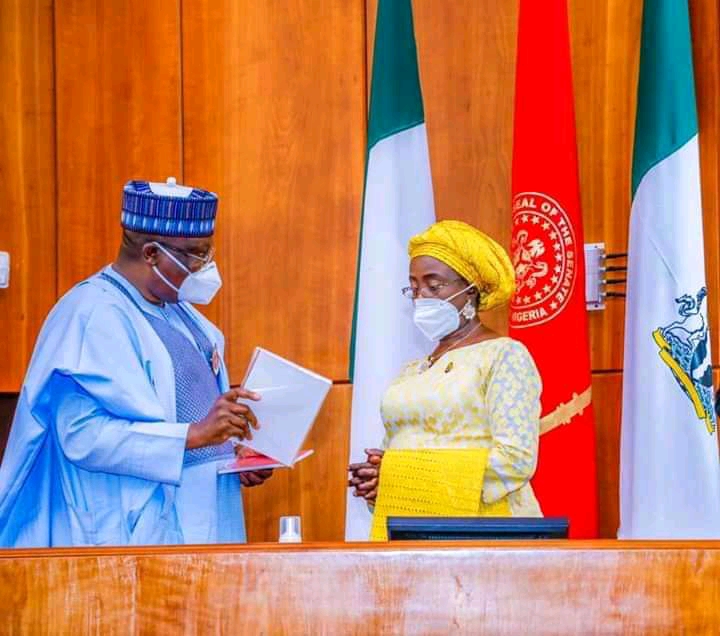
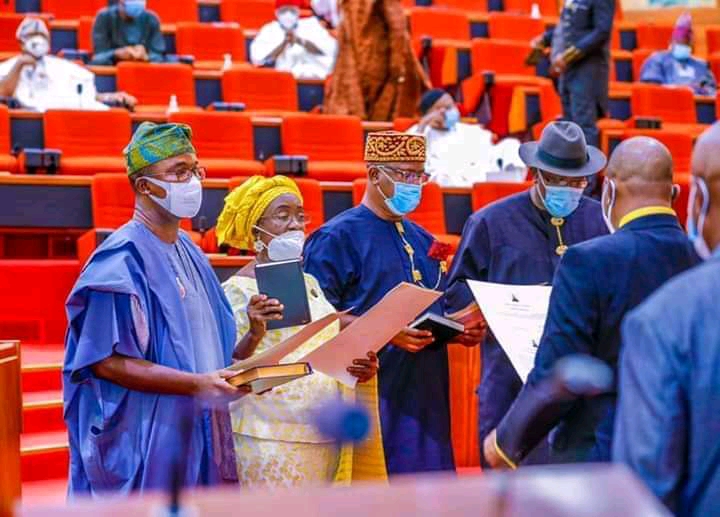
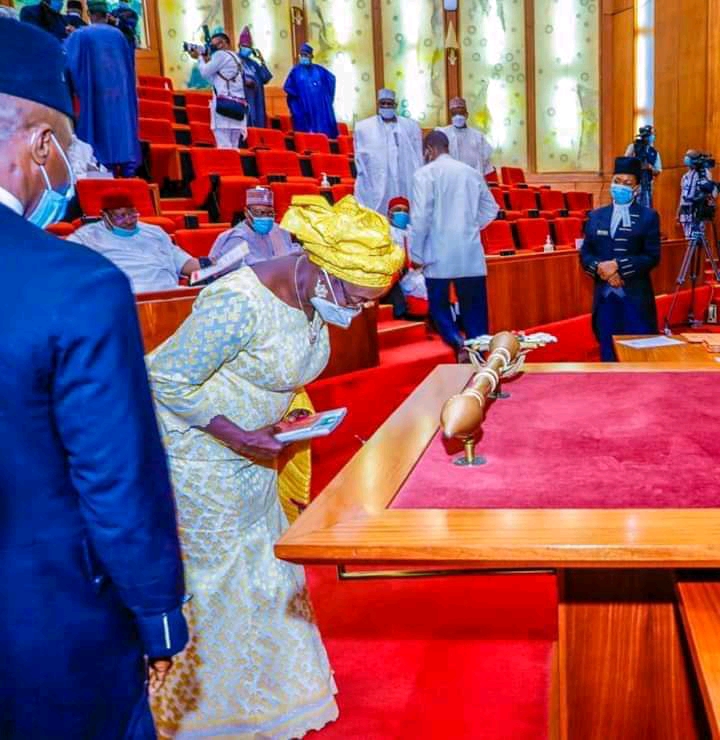
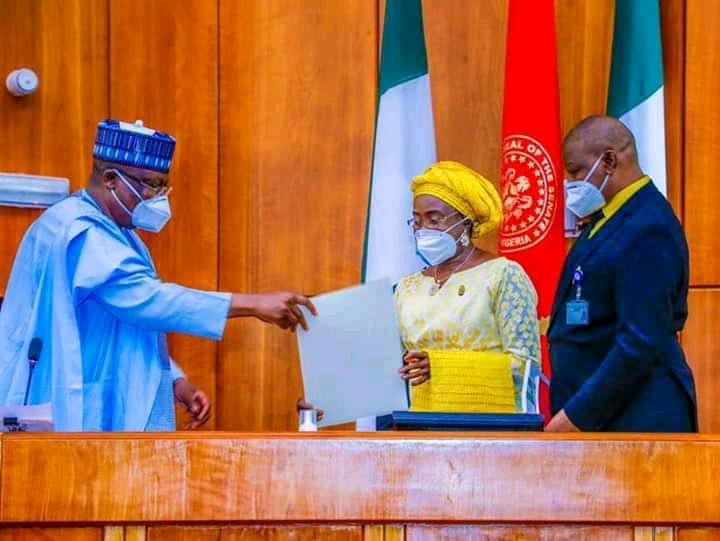
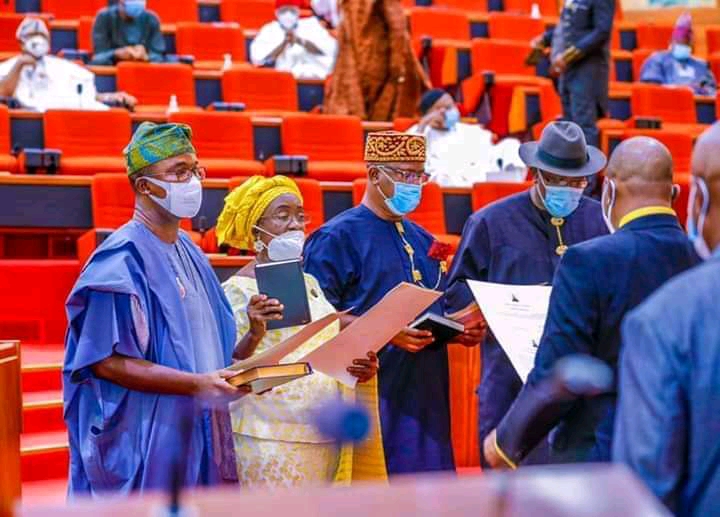
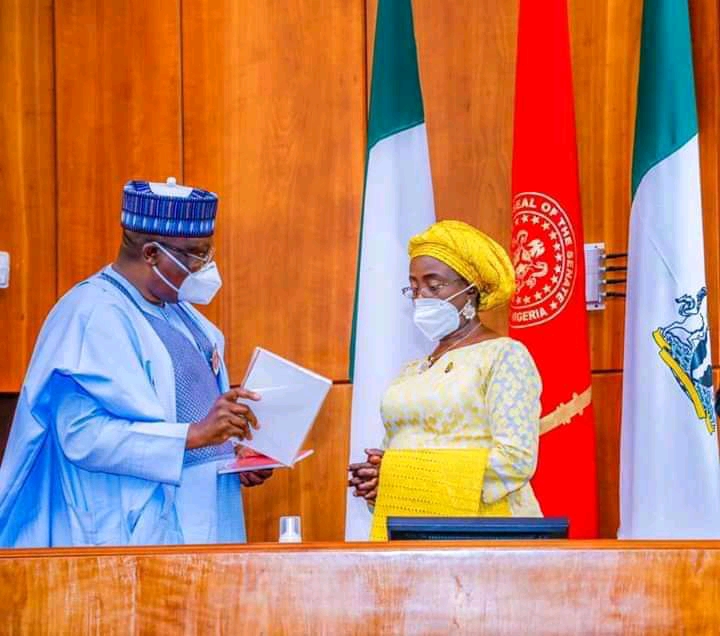
Senate President Ahmad Lawan on Tuesday swore-in the Senator representing Plateau South Prof Nora Dadu’ut and 3 others who were recently elected through bye-elections in states across the country.
The other new Senators sworn in include Senator Adetokunbo Abiru (Lagos East), Senator Henry Seriake Dickson (Bayelsa West), Senator Cleopas Moses (Bayelsa Central)
Speaking to newsmen earlier Prof Nora vowed not to disappoint the people of the southern zone and the entire State during her time at the Senate.
Prof Nora who is now the first female Senator from Plateau State expressed her appreciation to the APC leadership in the State and the people of the zone for reposing their confidence in her to serve them at the red chambers.
Our correspondent reports that Prof. Nora Dadu’ut emerged winner of the December 5th 2020 Plateau South Senatorial District bye-election by defeating her closest rival George Daika of the PDP for the nod to fill the vacuum created by the death of the former occupant of the seat late Senator Ignatius Longjan .
She said that she would work to tackle poverty in the consistency as well as empower women and Youths
Plateau State Governor Simon Bako Lalong on Tuesday 15th December 2020 witnessed the swearing in of Prof. Nora Dadu’ut as distinguished Senator of the Federal Republic of Nigeria. The swearing in was conducted by the Senate President Ahmad Lawan
AGAIN, GAGDI EMPOWERS CONSTITUENTS; DISTRIBUTES MOTORCYCLES, SEWING AND GRINDING MACHINES
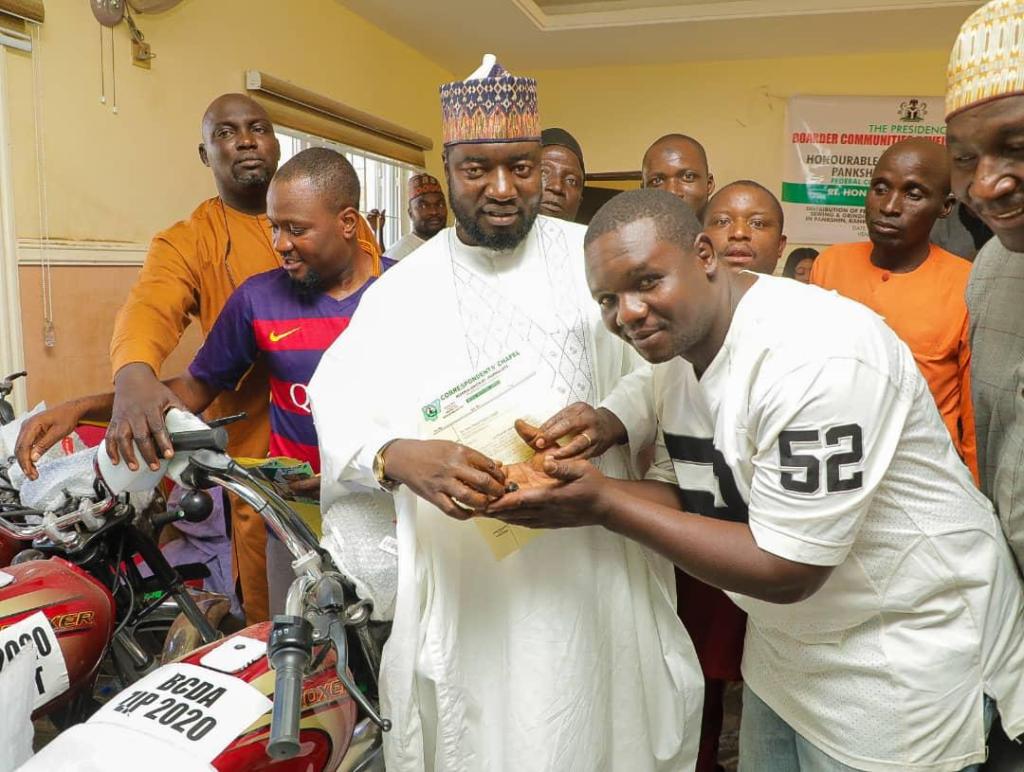
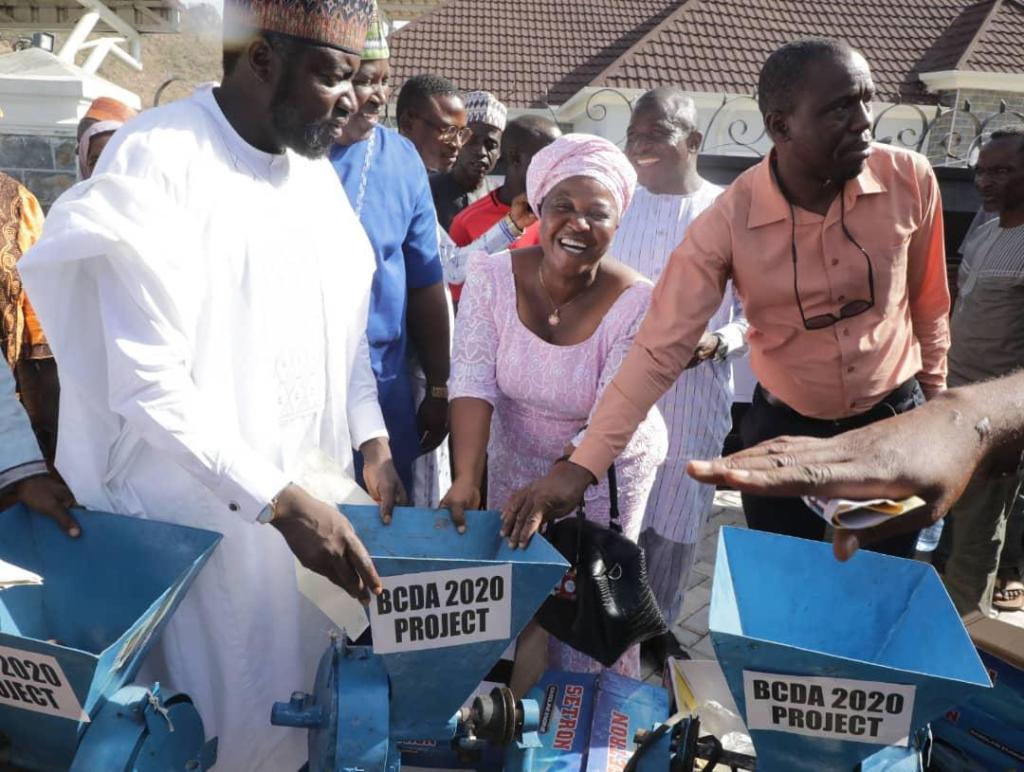
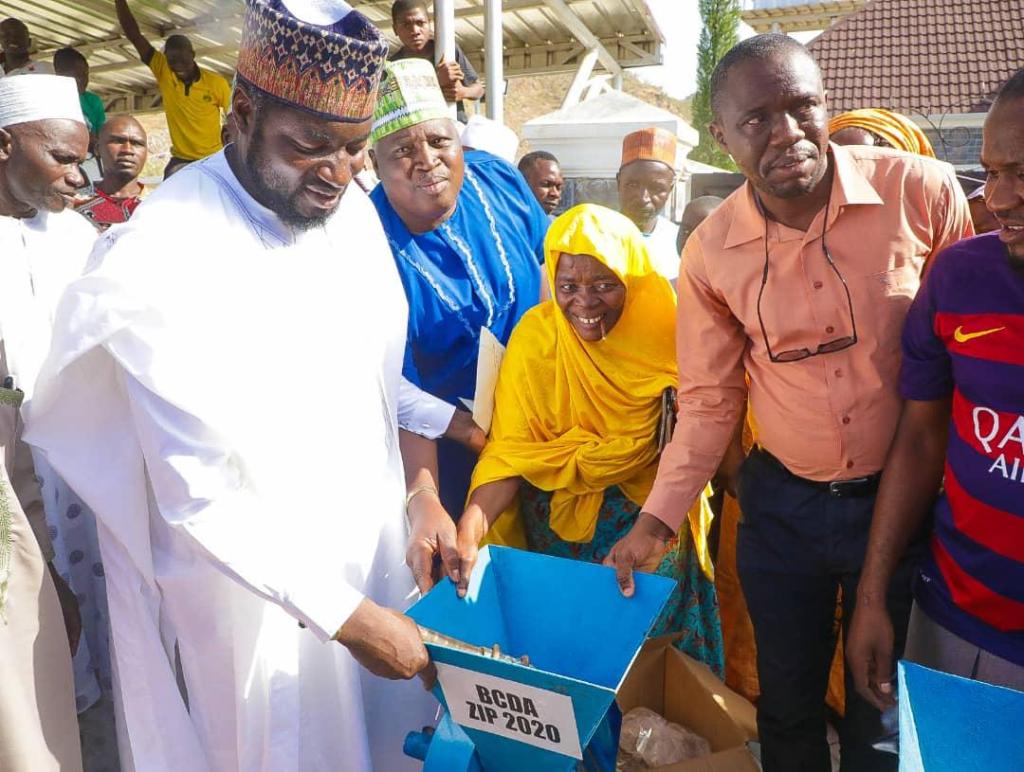
The atmosphere in Dengi, headquarters of Kanam LGA was hilarious on Sunday 13th December, 2020 as chants of “PKK SAI DANMALIKI” rents the air, with another set of people; youths and women alike, received motorcycles, sewing, as well as grinding machines, as part of the constituency intervention program of the member representing Pankshin/Kanke/Kanam Federal Constituency, Rt Hon. Yusuf Adamu Gagdi.
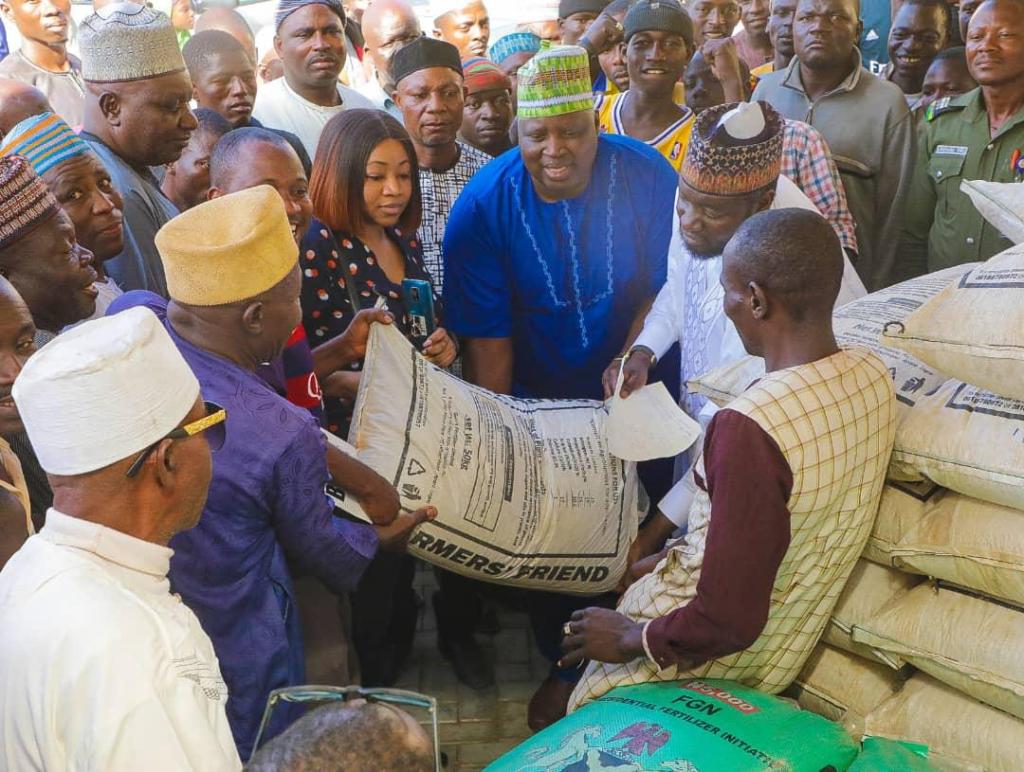
Alongside the items enumerated above, hundreds of bags of fertilizer were distributed to beneficiaries, most whom are Ward Coordinators of the rep member from 36 federal wards across the three local government areas that sums up the constituency.
The items, which were made available as constituency intervention project of the lawmaker by Boarder Community Development Agency, was distributed as a way of empowering the beneficiaries by making them self sustaining.
Speaking at the distribution ceremony, Rt. Hon. Gagdi says the items distributed are not part of the 400 motorcycles, 400 grinding machines and 400 sewing machines he had earlier scheduled to distribute to his constituents on the 16th December, 2020. He said the items are already purchased and safely kept awaiting distribution at a grand reception that will have the attendance of the Speaker of the House of Representatives Rt. Hon Femi Gbajabiamila by the end of January 2021.
Hon. Gagdi maintains that the occasion will not be feasible on the 16th December, 2020 but rescheduled to between January 26th to 30th 2021, because of an international engagement that requires the attendance of the speaker and his humble self.
The lawmaker added that the occasion will also feature the commissioning of his constituency office, which is currently under construction in Pankshin, the Headquarters of PKK. He said because of the lack of a suitable office accommodation to house his constituency office, he has decided to buy a piece of land in a suitable location to construct his constituency office, which is currently under construction.
You will recall that on February 23, 2020 Hon. Gagdi had distributed water pumping generators, other agriculture materials as well as cash donations to individuals to start up petty trades, as a way of empowering his constituents.
He had also distributed palliatives thrice at the heat of the coronavirus pandemic, as a way of cushioning the effect of the pandemic on his constituents.
Not long ago, he had disbursed 45 million naira cash nonrefundable business capital to the business community in Kanam LGA and donated a well furnished storey building to the APC in Kanam LGA for its office accommodation.
This is not to mention the hundreds of youths that were empowered with job opportunities in various federal government agencies, as well as military and paramilitary organizations.
The tens of bills and motions so far sponsored by Rt Hon. Yusuf Adamu Gagdi in the discharge of his core legislative functions, as well as leading his committee members on oversight visits to all naval formations across the country, has qualified the member representing Pankshin/Kanke/Kanam Federal Constituency as an all round legislator who balances his lawmaking functions with constituency development.
Gagdi has become a reference point for legislative excellence in whom the electorate of PKK are well pleased.
GAGDI HEARTFELT CONDOLENCES TO THE PEOPLE OF GARGA, JAHR NATION, KANAM TRADITIONAL COUNCIL AND THE ENTIRE KANAM LGA.
The Member Representing Pankshin/Kanke/Kanam Federal Constituency and Chairman House Committee on Navy Rt. Hon. Yusuf Adamu Gagdi has expressed heartfelt commiserations with the immediate family, people of Garga, the Jahr nation, Kanam traditional council, friends, associates and the entire people of Kanam over the loss of a father, traditional and community leader, Alh Adamu Aliyu Mai Naira, the Ra’an Garga and the district head of Garga describing him as “an outstanding leader of rare courage and truth who is not afraid to tell the truth and give justice to whom justice is due”.
The royal father passed on early hours of Saturday, after an illness.
Condoling with the royal family, Kanam traditional Council, friends, associates and the entire people of Kanam the Danmajen Jhar urges them to take solace in the fact that all mortals are destined to ultimately return to their maker, adding: “What would then matter is how well we have carried out our stewardship on earth, and I believe Alh Adamu Aliyu played his role well.”
As the royal father goes home, the lawmaker affirms that he left a bold footprint on Kanam’s leadership, and his role in promoting unity, peace and development will always be remembered and appreciated by posterity.
Gagdi prayed that Allah will accept the soul of the departed, and reward his good deeds with paradise.
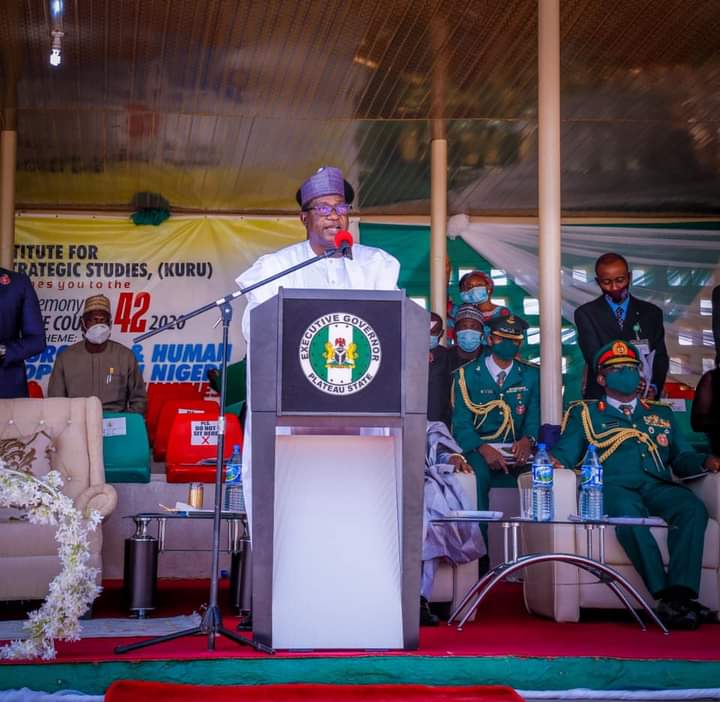
NIPSS – COURSE 42 GRADUATION GOVERNOR LALONG REPRESENTS PRESIDENT MUHAMMAD BUHARI
NIPSS COURSE 42 GRADUATION
Plateau State Governor Simon Bako Lalong represented President Muhammadu Buhari at the Graduation Ceremony of the 42 Senior Executive Course participants of NIPSS in Kuru- Jos today 12th December 2020.
Below is the speech of the President delivered by the Governor.
ADDRESS BY HIS EXCELLENCY, MUHAMMADU BUHARI, GCFR, PRESIDENT AND COMMANDER IN CHIEF OF THE ARMED FORCES, FEDERAL REPUBLIC OF NIGERIA, AT THE GRADUATION CEREMONY OF THE SENIOR EXECUTIVE COURSE 42 OF THE NATIONAL INSTITUTE OF POLICY AND STRATEGIC STUDIES (NIPSS) HELD AT KURU-JOS, PLATEAU STATE ON 12TH DECEMBER 2020. Protocol
It is my pleasure to be here at the graduation of yet another set of participants from our nation’s most prestigious policy think tank. I would like to congratulate the graduating class on the successful completion of the 42nd Senior Executive Course. At a time when our country is facing a myriad of challenges, the need for high quality strategic thinking and action across the public and the private sectors has never been greater. This is why I believe that it is significant that your set is graduating at this time and you must waste no time in getting into the fray.
It is clear that we live in a world that is in the throes of turmoil. Global currents are interacting with local tides to create stormy trends for our society. The Coronavirus pandemic has had a severe impact on the global economy resulting in increasing expenditure on healthcare and related infrastructure, disruptions to supply chains and suspension of economic activities as a result of prevalent lockdowns and massive job losses. Measures taken to contain COVID-19 have also had the effect of depressing the demand for crude oil and precipitating an unprecedented oil price crash. All of these have tipped the Nigerian economy into recession.
The facts and figures are grim but the point of this overview is not to drive us into despondency or disillusionment. Rather it is to attune our minds to the enormity of the task ahead. The times levy a demand on institutions such as this one and on its graduates for innovation and creative intelligence in addressing our national challenges.
You are all probably familiar with the axiom, “Never let a crisis go to waste.” It is an axiom that sums up the imperative of the present moment. A crisis, such as that which we are facing now, is an opportunity to institute a new and better order of things. Inherent in this moment, is an opportunity to dispense with old unproductive models of thinking and summon the future. Whether you are a senior bureaucrat or a military officer or a law enforcement official or a chieftain in the private sector, you must, as of this moment, see yourself as part of a cohort that must lead the charge into the future.
Often when we discuss the condition of our country and whose responsibility it is to change it, we place the blame at the doorsteps of those that we refer to as “the elites.” In these conversations, the term “elites” is used as a hazy construct referring to a category of powerful persons who seem to be faceless and nameless abstractions. Such is the shroud of anonymity in which these elites are cloaked that they often seem like spirits.
This description also lends an air of metaphysical mystery to our national problems. If the national condition is the aggregate of the actions or the inactions of the elites and these elites are anonymous ghosts, then our problems will seem paranormal and irresolvable except by means of magic or miracles. And yet our developmental challenges are not cosmic at all; they are understandable and unexceptional, common to many countries across the world and they are eminently solvable.
While I agree that elites must bear responsibility for the state of the nation and for fixing it, the accurate assignment of this burden of responsibility is impossible without arriving at an understanding of precisely who these elites are. For the avoidance of doubt, it is my submission that when we speak of the elites, we are actually referring to ourselves. We – all of us gathered in this arena – are the elites and we are collectively responsible for what our nation is and what it can become.
This unique burden is a consequence of our privilege. One might inquire as to the precise nature of this privilege that sets us apart and places the fate of two hundred million people upon our shoulders. In its simplest definition, privilege is a special advantage, right or benefit possessed by an individual or group as a result of birth, social position, effort or concession. In the context of a nation in which the majority of citizens are poor and illiterate, the educated and the accomplished, the wealthy, those in positions of authority in government and its agencies, the legislature or judiciary clearly belong to a privileged class. They are the elites of the society.
In the context of our nation the elites are found in the academia, in religion, government and business, across formal professional cadres and of course the arts. Our privilege manifests as easier access to capital or patronage through our social networks, to placements in highly competitive prestigious institutions such as this one, to political power, more rigorous education and other opportunities for advancement. It is always evident that by birth, effort or concession, we, the elites, are better off than the vast majority of their peers. In many ways, in our individual or collective capacities we determine not only formal rules but also informal rules and trends.
What we respect is what is respected and we shape in many profound ways the fate of our communities and ultimately the culture at large.
It is my conviction that the elites both individually and collectively have a responsibility and an obligation to society to plan it, organize it, order or reorder it and above all to make sacrifices for it, for the maximum benefit of all. It is their duty to find common cause across professions, vocations, ethnicities and faiths defining the minimum terms and conditions for the safety, security, growth and prosperity of the community. It is they who clearly define what is lofty, noble, and deserving of honour and how these values can be sustained and promoted. This is the burden of privilege that we all bear. This is the meaning of “Noblese oblige” – nobility obligates or perhaps more correctly for our context, the obligation of privilege.
I have gone to these lengths in my emphasis on our privileged status because we tend to discuss Nigeria and her institutions in terms of dissociative powerlessness. When things do not work, we explain by reaching for terms like “the Nigerian Factor”, “the system” or “vested interests.” We use these clichés to deflect responsibility and externalize culpability even for the institutions under our charge. These terms are diversionary because they refer to the actions or inactions of people like us – elites and people of privilege who have shirked the high responsibility that accompanies their status.
Here among us are senior officials in the public sector bureaucracy, captains in the private sector, commanding officers in the armed forces and the law enforcement establishment. You are men and women of accomplishment and authority. While all of us understand the bounds of our authority as prescribed by laws and rules, we are by no means powerless. We have spheres of influence within which we have both the responsibility and the power to promote new progressive ways of doing things. This is a burden that cannot be escaped or deferred.
This very institution was founded to empower decision-makers and executives across the public and private sectors and enable them to bear this burden. The selection process is deliberately competitive and the course load is intentionally rigorous. Indeed, the National Institute of Policy and Strategic Studies is an elite institution. There are few emblems of elitism in our society as credible as the designation “MNI – Member, National Institute.” To have those letters following your name is an indicator of your considerable status so there is no point attempting to downplay it.
To be clear, the burden of privilege is rooted less in altruism than in enlightened self-interest. It is the recognition that no society can endure where the majority is poor and a privileged minority monopolizes access to opportunity or in which justice and security are perceived as the preserve of the powerful or where the majority, confounded by the asymmetries of wealth and power in the society, become unable to see legitimate pathways of self-actualization and success.
In recent months, we have seen what happens when resentment, bitterness and discontent snowball into social unrest. We have also seen that when order collapses, all of us are directly and indirectly in peril. Enlightened self-interest is an entirely unsentimental calculation which holds that the lives, livelihoods and investments of the privileged are truly safe only when they expand the circle of opportunity and prosperity. This means tackling social inequality and entrenching better standards of living for the generality of the people.
As custodians of the social order, we cannot fail to realize that a fast growing young and dynamic population that feels alienated and disempowered is a threat to stability. This is why this administration has set its sights on lifting 100 million people out of poverty over the next decade. This calls for the expansion of access to opportunity and investment in human capital development on a scale that is unprecedented in our history.
At times, the relationship between the public sector and private sector is adversarial. We have come a long way from the era in which the Government was the principal actor in the economy. Today, we recognize that prosperity and growth lie in unleashing the Nigerian genius for enterprise and industry that is domiciled in her private sector. The role of the Government is now primarily that of a facilitator and an enabler. The old dichotomies between the state and the market no longer apply. We recognize that the path to the future will be paved by consolidating the interdependence of these sectors.
This is why we are building a new ethic of collaboration in which the public sector sees its role as enabling the private sector to perform optimally. Job creation and youth empowerment can be undertaken at scale by the private sector but it requires Government officials to encourage enterprise by promoting the ease of doing business. For many Nigerian entrepreneurs, the Government is perceived more as a hindrance than a help whether in terms of taxation, infrastructural deficits and the general lack of an enabling environment.
This has to change and this administration is committed to changing it. This is the spirit behind the Executive Orders which I signed in May 2017 on Support for Local Content in Public Procurement by the Federal Government which requires that MDAs utilize made in Nigeria products and on the Promotion of Transparency and Efficiency in the Business Environment. Through the Finance Act of 2020, we have consolidated various statutes on taxes into one law and thereby rendered the tax regime simpler and more accessible to citizens. Through this Act, we have also provided incentives to encourage small and medium scale enterprises.
Laws and policies are only as effective as the institutions that implement them and those institutions are run by elites such as those gathered in this room. Over the years, the reputation of Government as predatory, rent-seeking and extortionate has derived from the interaction between entrepreneurs and government institutions. It has led to the unfortunate situation in which regulatory institutions strangulate enterprise and discourage industry through the creation of unnecessary regulatory roadblocks often in the guise of “revenue generation.”
Our role is to create an environment in which enterprise and industry can thrive. Only as this economy expands can the revenue available to the Government in the form of taxation also increase. If government agencies cripple the economy through predatory rent-seeking, they create bitter resentments, reduce revenue channels and diminish their legitimacy.
I urge you all to make it your mission to dismantle all such roadblocks of rent-seeking and impediments to doing lawful business in your spheres of influence in your respective Ministries, Departments and Agencies. In the day to day discharge of your duties, the one question that should animate your conduct is whether you are serving as an enabler to lawful business or an obstacle. I urge you also to see the widespread perception of the Government as being corrupt as a personal affront. As officers of authority in the public bureaucracy, this perception reflects more on you than on any other cadre of government workers.
Discretion has been identified as an important element in the phenomenon of official corruption and advanced nations have put in place systems that either nullify or reduce the significance of discretion. This is one of the reasons for the introduction of electronic platforms in the operations of the public bureaucracy – to reduce the interpersonal interface which is prone to all the vagaries of misconduct that are rooted in human discretion.
There are obvious and undeniable benefits that come with being able to procure a driver’s license or a passport or a certificate of occupancy or a business registration certificate electronically. In a world in which investors are either attracted or repelled by the speed of institutions, how swiftly regulatory agencies deliver their services is a critical factor. Corruption which slows down institutional processes costs us dearly in terms of lost time and lost opportunities.
While this administration will continue to pursue the course of digitization of governance processes, it is important to point out that neither laws nor technology can totally eliminate the role of discretion in bureaucracies. As people of authority, a measure of discretion is inherent in your official capacities. This too is part of your unique privilege. Your high station affords you the license to make choices based on your preferences and perceptions as well as to register dissent with directives that conflict with your values through official channels. This institution and this course in particular were established to enrich the exercise of official discretion with sound judgment and strategic discernment. The bureaucracies to which you belong will either rise or fall on how ably you wield your discretionary powers.
There is a plague of cynicism in our public life that has been fostered by the apathy and indifference of the elites to the common good. The principle of enlightened self-interest does not ask us to do things merely out of the goodness of our hearts. It derives instead from a rational assessment of reality. To interrogate our present situation and reflect upon our circumstances is to realize that we cannot take solace in our relative affluence in the midst of widespread misery.
By reason of your position, you may have the financial muscle to absorb mounting costs of living but this cannot compensate for the perils that come with deteriorating standards of living. In fact, as we are now seeing, relative material affluence sets those that have it apart as targets of violent crime such as kidnapping and armed robbery. Consider the precautions and costs that you must sustain just to undertake interstate travel safely.
Consider how the institutional reputations of our law enforcement and security agencies have rendered their personnel vulnerable to personal attacks. And even if we are not directly endangered by these perils, consider the price that our families and loved ones must pay by association. This is because ultimately, neither status nor class can indemnify elites against social catastrophes. As Martin Luther King Jr. said, “We are caught in an inescapable network of mutuality, tied in a single garment of destiny. Whatever affects one directly, affects all indirectly.”
Precisely because they share the same economy and ecosystem, the fates of the elites and the masses are intertwined. When, for example, insecurity plagues rural agrarian communities, urbanites feel the impact in terms of the rising cost of food. Rural-urban migration leads to increased pressure on urban infrastructure and an increase in urban poverty. Rural insecurity leads inexorably to urban insecurity.
These plagues emanate from the failure of institutions and all of you gathered here today are custodians of institutions. More importantly, they underscore the importance of legitimacy in the relations between state and society. It is important that we recognize that Government institutions have no inherent legitimacy. Their legitimacy derives from how competently they fulfill their obligations to the public under the social contract. This is the standard by which we will be judged and our legacies assessed.
It is no longer enough to boast of successful careers in distinctly unsuccessful institutions. The true measure of our success will be revealed by the extent to which we are able to promote progressive values in our spheres of influence.
I am not suggesting that this is easy; I am, however, insisting that it is necessary. In many instances, being an exemplar of progressive values will make you part of a countercultural minority within the establishment but it will also inspire others to take up to the challenge. The simple resolve that things should work under your watch will win you both friends and adversaries but the evidence of history is clear that change must first come from the margins before it can become mainstream. Conclusion
In conclusion, let me reiterate something I mentioned earlier. I am in the midst of senior civil servants ranking no less than directorate level with at least five years left in the service, senior officers in the armed forces and the police, and nominees of professional bodies with years of experience in their respective professions. You are by no means powerless bystanders in the trends and events shaping the fate of this nation. You are critical actors now and in the days to come. As individuals and as a cohort, you possess sufficient authority and influence to reorient the institutions over which you have charge.
I urge you to consolidate the associations and friendships that you have established here and wield them as networks for positive change across all sectors of public life. Great societies are built by a critical mass of citizens that are guided by enlightened self-interest. It is my hope that you will be the lynchpin of this critical mass of elites in our nation. Once again, I congratulate you on your graduation from the Institute and I wish you all the very best in your endeavours going forward.
NORTHERN GOVERNORS CONDEMN ATTACK ON KATSINA SCHOOL
The Northern Governors Forum is enraged over Saturday’s attack by bandits on Government Science Secondary School, Kankara in Katsina State.
Chairman the Forum and Governor of Plateau State Simon Bako Lalong in a statement said the Governors totally condemn the unfortunate incident which is regrettable and intolerable.
While expressing solidarity with their colleague Governor Aminu Bello Masari, the Government and people of Katsina State, the Northern Governors said they stand with the authorities as they do everything possible to respond to the situation and ensure that no student gets missing or harmed.
Governor Lalong said they remain solidly behind security agencies who responded appropriately and have been in pursuit of the bandits to ensure that normalcy is restored and the criminals are apprehended.
He also said the Forum appreciates the directive by President Muhammadu Buhari to the security forces to deploy every available resource needed to deal with the situation.
Lalong said the prayers of the Forum are with the families of the students, the school authorities and the injured, even as he called on the citizens to volunteer useful information to the security agencies and relevant Government bodies that will assist in quick resolution of the sad incident.
Dr. Makut Simon Macham Director of Press & Public Affairs to the Governor of Plateau State and Chairman Northern Governor’s Forum. December 12, 2020
The Plateau Our Heritage, (POH), group has disclosed that the search for a true identity for Plateau state must begin with the return of previously known names of cities and towns that were illegally renamed by settlers.
Also, traditional titles bestowed on indigenous people using alien nomenclature should be reversed and replaced by cultural titles that depict the Heritage of the various ethnic Nationalities, participants in a heated debate insist.
The decisions was canvassed by the group who argued that for long, settlers have coined names of cities and towns for their conveniences to the detrilment of true owners of such localities.
In an open a debate on the raging issue, contributors were unanimous on a return to status quo as far as the naming and renaming of settlements were concerned.
As a first step, it tasked state indegenes to identity towns and villages; including landmarks with aboriginal heritage but have now been renamed with a view to engaging the authority for the purpose of reversing the trend.
For example, the team was saddened by the turn of events in major cities particularly, where settlers have renamed towns and villages and the indegenes appeared not to be disturbed about it; thereby, distorting originality of these areas and landmarks.
“If possible i think we should wade into the silent historical counterclaims between the Berom and the Jarawa on the ownership of areas like Rikkos, Kabong, parts of Tudun Wada, the Jishe/Gishe saga and others” which has been under contention as per ownership, was part of the argument put across as the debate rages.
“I believe reverting these names to the original ones is very possible if government does the needful. This is because they have institutions: schools, hospitals, clinics and others in these locatoons. Change all official documentations to the original names, communicate with the officials in those names and pass a legislation at the house of Assembly to that effect” are some of the suggestions put forward.
Though, others are of the opinion that the POH take the bull by the horn and commence the process by engaging the relevant government agencies responsible; “the purpose is to support the State Government effect the changes to their original tribal names”, it was stressed.
“Another point is the hegemonic tendency of the Hausa-Fulani who, we cannot really blame for trying to foist their identity upon ours, in a vicious cycle of internal colonialism.
“Since it is clear that our plight in this regard is deep-rooted in some of these circumstances, we must stand up to correct these although it is sad that changing some of these names will require rigorous administrative and legislative exercises”, it was further suggested.
However, another disturbing trend in the land is that of foreign titles; conferred on natives bearing names that do not reflect our indigenous realities. Take for example titles like…Madaki, Talba, Sardauna, Jarumi, Wakili, Garkuwa, Dan Masanin, Dan iya, etc etc..These titles are pointers to our subservience to some powers that be.The titles and their meanings can be changed to native titles” a contributor submits.
In response to the debate, the Chairman and Convener of the POH, Alex Kwapnoe and Pam Ayuba Dangwong respectively assured that the group’s committee on such issues would be mandated to take up the challenge and come up with an acceptable approach to the issue.
LATE SAM NDA-ISAIAH: A MONUMENTAL LOSS TO NIGERIA – NORTHERN GOVERNORS.
The Northern Governors Forum says it is devastated by the shocking news of the death of the Founder and Chairman of Leadership Newspapers Sam Nda-Isaiah who passed on at the age of 58.
Chairman of the Forum and Governor of Plateau State Bako Lalong in a statement said the development is a monumental loss to Nigeria and the Northern Region.
Lalong said “this is a very sad development for the country as we have lost one of the most vibrant and courageous media entrepreneurs in Nigeria. Sam was a visionary man who believed in the unity, peace and progress of Nigeria. He did so through his writings and contributions reflected his passion for a strong democratic culture”.
Governor Lalong also eulogised the late Sam who was a successful businessman and never afraid to dream big and venture into various fields. His big dreams led to the birth and nurturing of the Leadership Newspapers that has grown to become one of the leading newspapers in the Northern Region as well as the country at large.
Lalong said the deceased will be greatly missed for his patriotism, selflessness and courage in the service of Nigeria, as well as continue to be remembered for his great legacies of hardwork and mentorship which has inspired many youths to dream big and realise their ambitions.
While praying God to grant him eternal rest and comfort his family, friends and associates, Lalong urged the Management and Staff of Leadership newspapers and other businesses founded by the late Sam Nda-Isaiah to remain diligent as they keep his dreams and legacies alive.
Dr. Makut Simon Macham Director of Press & Public Affairs to the Governor of Plateau State and Chairman Northern Governor’s Forum. 12th December 2020.
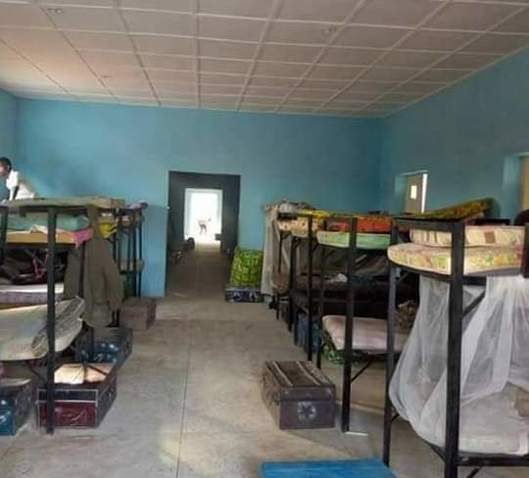
Armed Bandits on Friday attacked a boys boarding school in Kankara Local Government Area of Katsina state, killing a security guard, and kidnapping large number of students. Residents said.
The Bandits stormed Government Science Secondary School Kankara (GSSS) located in Kankara town, shot a security gateman and abducted an undisclosed number of students. Multiple sources revealed that the bandits at their large number on motorbikes stormed the school at 10:45 pm Friday night with heavy arms while shooting sporadically for over an hour.
Malam Ummaru Kabiru, a resident of the area who also went to the school to search for his two missing brothers told Katsina Post that “The missing students could reach up to 500”
According to him, students headcount is currently ongoing, to ascertain the exact number of the missing students. Katsina Post gathered Kankara Local Government among the eighth frontline Local Government that are most affected by insecurity in Katsina state despite heavy security checkpoints stationed in the area.
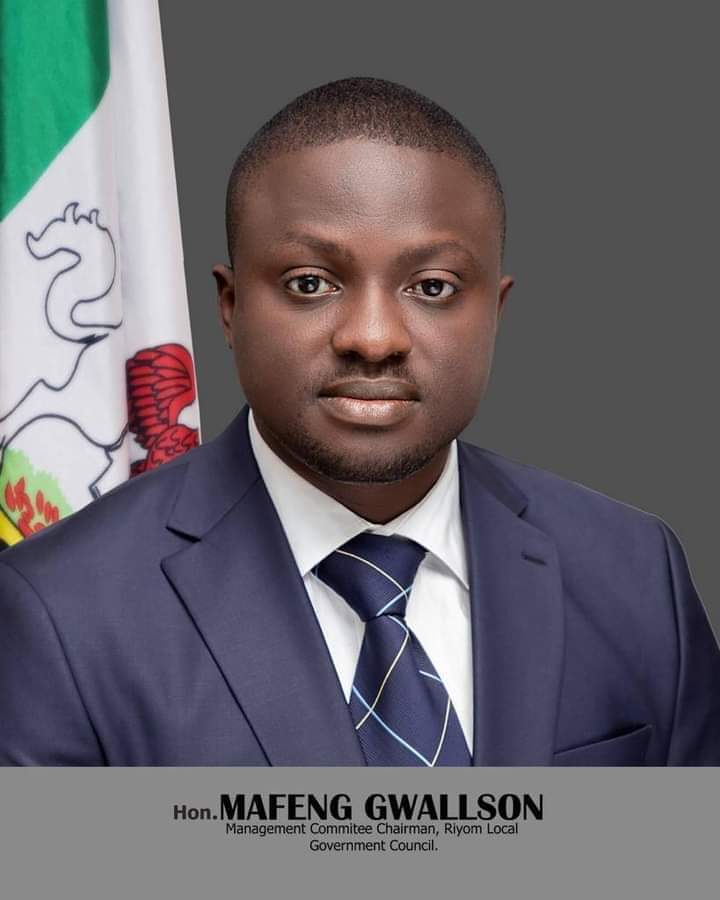
BIRTHDAY FELICITATION TO HON MAFENG GWALLSON FROM APC YOUTHS ONLINE FORUM.
We felicitate with you today sir, on the occasion of your birthday.
You are a clear representation of what the forum desires for our leadership spaces, a visionary youth in governance; and we are proud to associate with you.
It is our prayers that God will continue to add more years to you in good health and in the services of our state, nation and humanity.
HBD sir.
Saminu Maigoro State Chairman APC Youths Online Forum


 Freelance Reporters